The story
Sixty years between Abruzzo and the Marche, from her father's workshop to the gallery in Montegranaro.
A workshop learned as a child, a technique sought for years, the churches restored, the prizes won as a girl and the plates painted for the towns.
- 1967
Guardiagrele
AbruzzoBorn in Guardiagrele, at the foot of the Maiella, in a land where ceramics and wrought iron are old trades. She is born into the craft: her father, Antonio Vincenzo Iannucci, is a painter and restorer.
- 1980—1990
Her father's studio
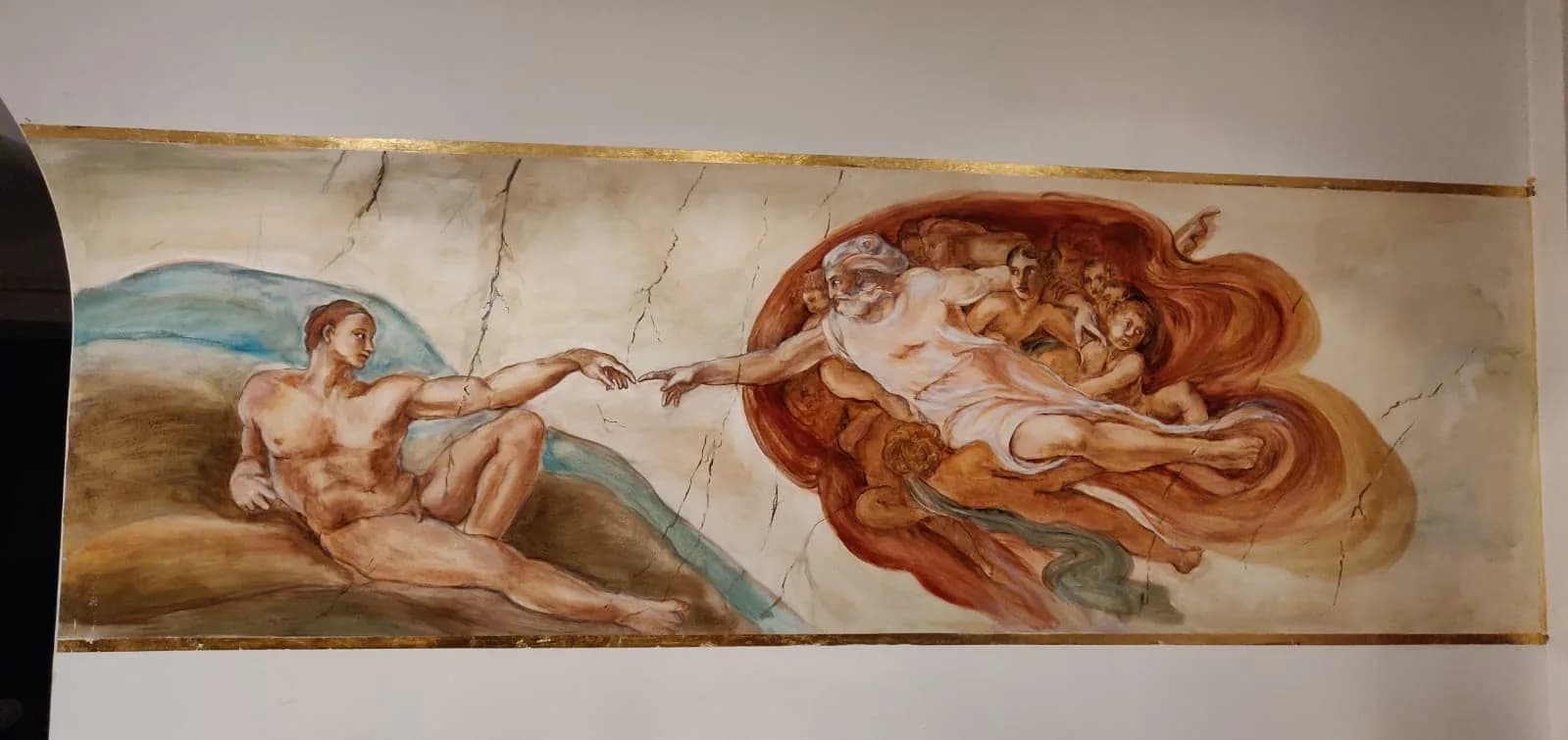
She grows up in her father's workshop (Ortona 1939–2012), who paints sacred cycles in the churches of Abruzzo. She works beside him until she is twenty-three. That is where she learns the thing that stays with her: a figure stands on the particulars nobody notices.
- 1990
Maestro Bozzelli
RapinoShe takes her own path in ceramics and trains under Maestro Luigi Bozzelli (Rapino 1922–2010), who opens the secrets of artistic ceramics to her. Rapino is one of the ceramic towns of Abruzzo, and Bozzelli one of its names.
- 1992—1999
The first prizes
Two first prizes in the Ceramics section of the Abruzzo Artistic Craft Biennial, in 1992 and 1994. Then the «Nicola da Guardiagrele» Gold Medal in 1995 and the «Oro d'Abruzzo» silver medal in Pescara in 1999. These are the ones she holds dearest, won as a girl, at home.
- until 2003
Fictilia
She opens her art and ceramics workshop and calls it Fictilia, Latin for an earthenware vessel: the first state of a ceramic object, before fire changes it. She keeps it open until 2003.
- the restoration years
The churches of central Italy
She matures her art restoring numerous churches across central Italy. To a tradition of painting, sculpture and restoration she adds ceramic decoration, the field where the awards will come.
- 10 December2017
Art and Ceramics
Monte San PietrangeliShe opens new premises in Via Luigi Fontana, with the ribbon cut by the mayor and the whole town council. It is not only a workshop: it becomes a school.
- 2018
Courses in the schools
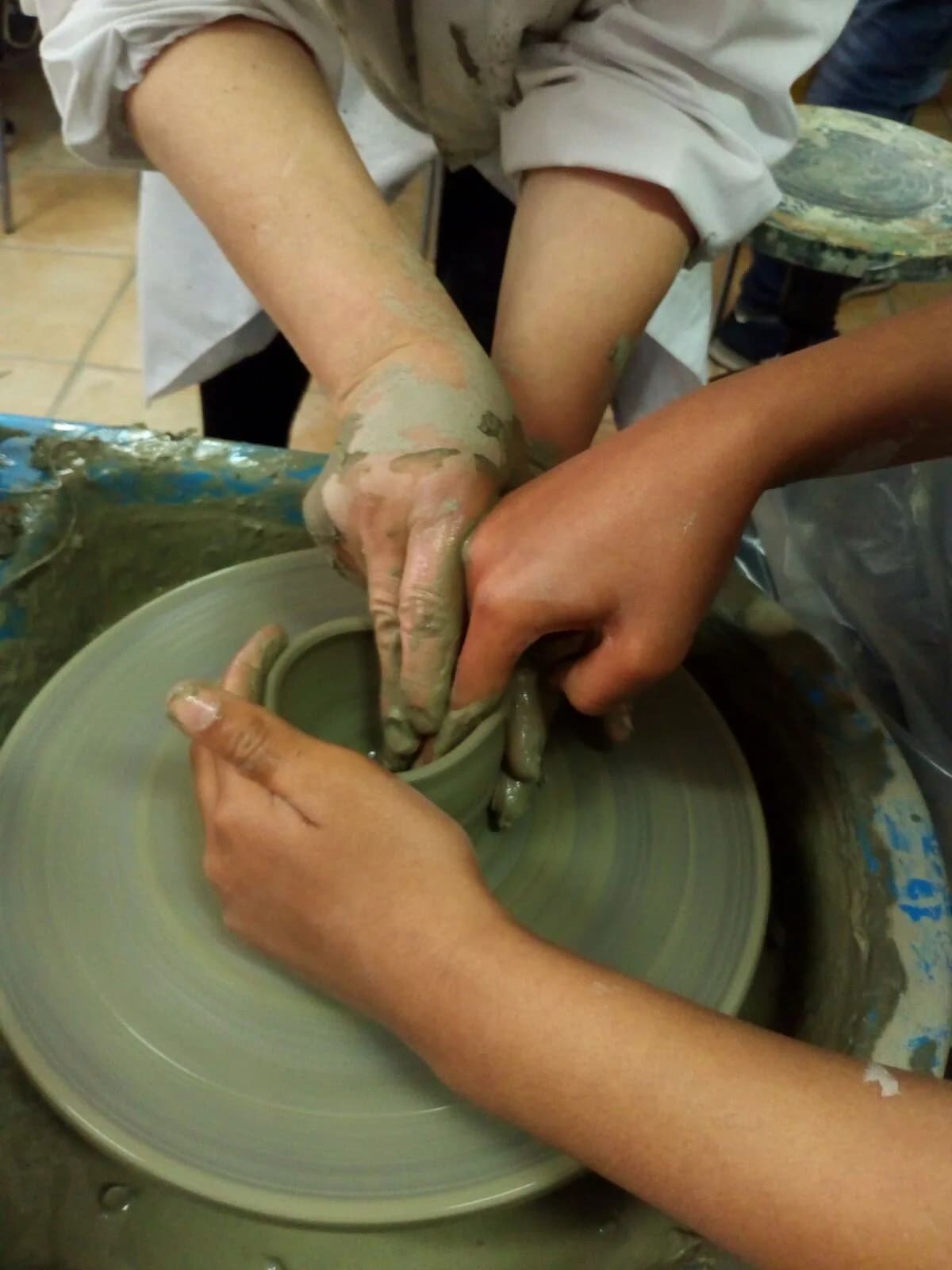
Monte San PietrangeliShe begins devoting many hours to the town's schools, teaching handwork and the art of ceramics. Her pupils, of every age and background, become known locally as the «Mattartisti».
- 1—26 August2018
A dress made of rubble
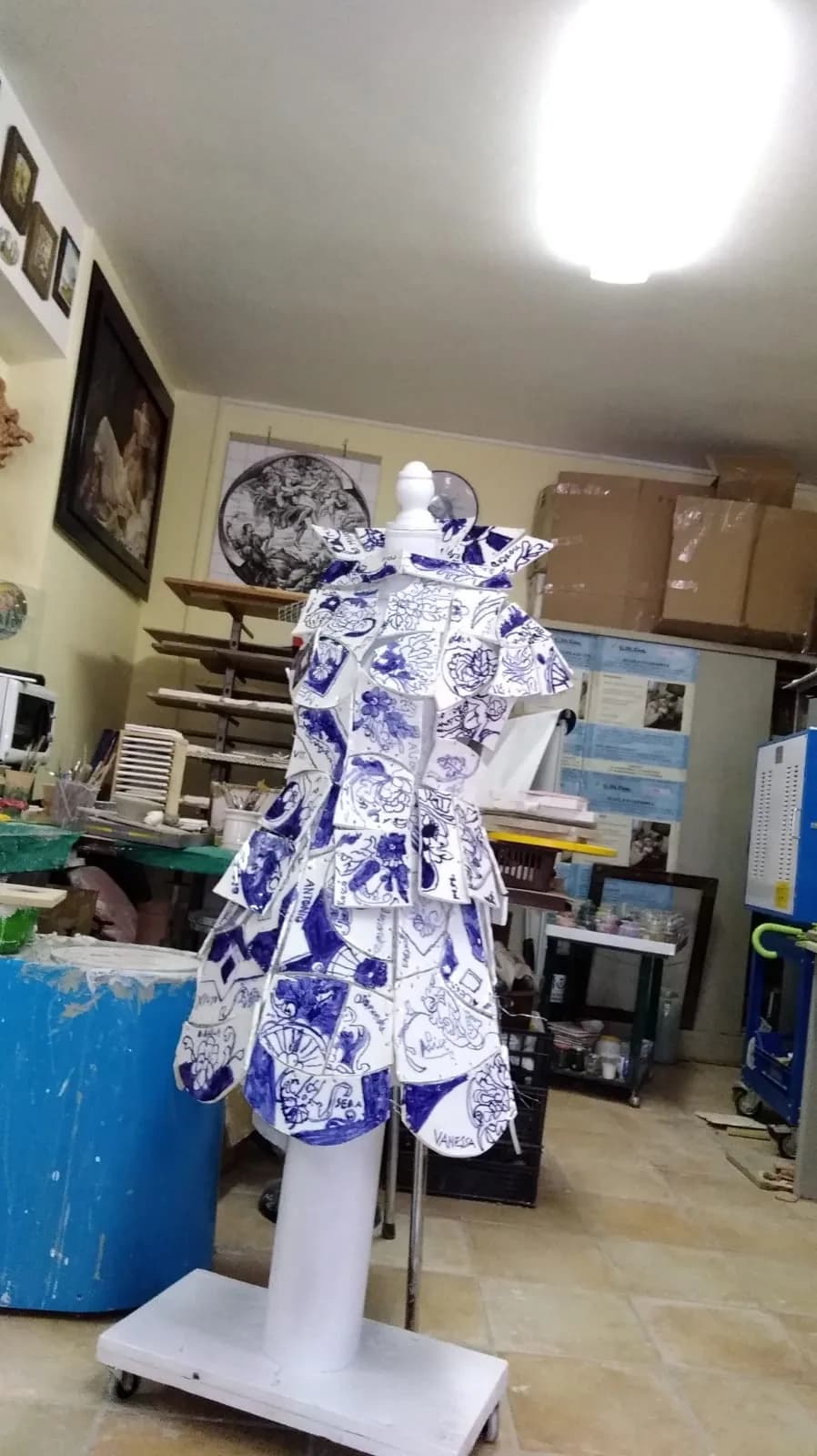
GuardiagreleShe exhibits at the 48th Abruzzo Artistic Craft Exhibition together with the ceramics school supported by the council. The theme is the earthquake: with the children she makes a dress of ceramic fragments, each one modelled, painted and signed by a pupil. Every piece is a collapsed building, and out of the rubble, the rebuilding.
- 16 and 31 August2019
The bells
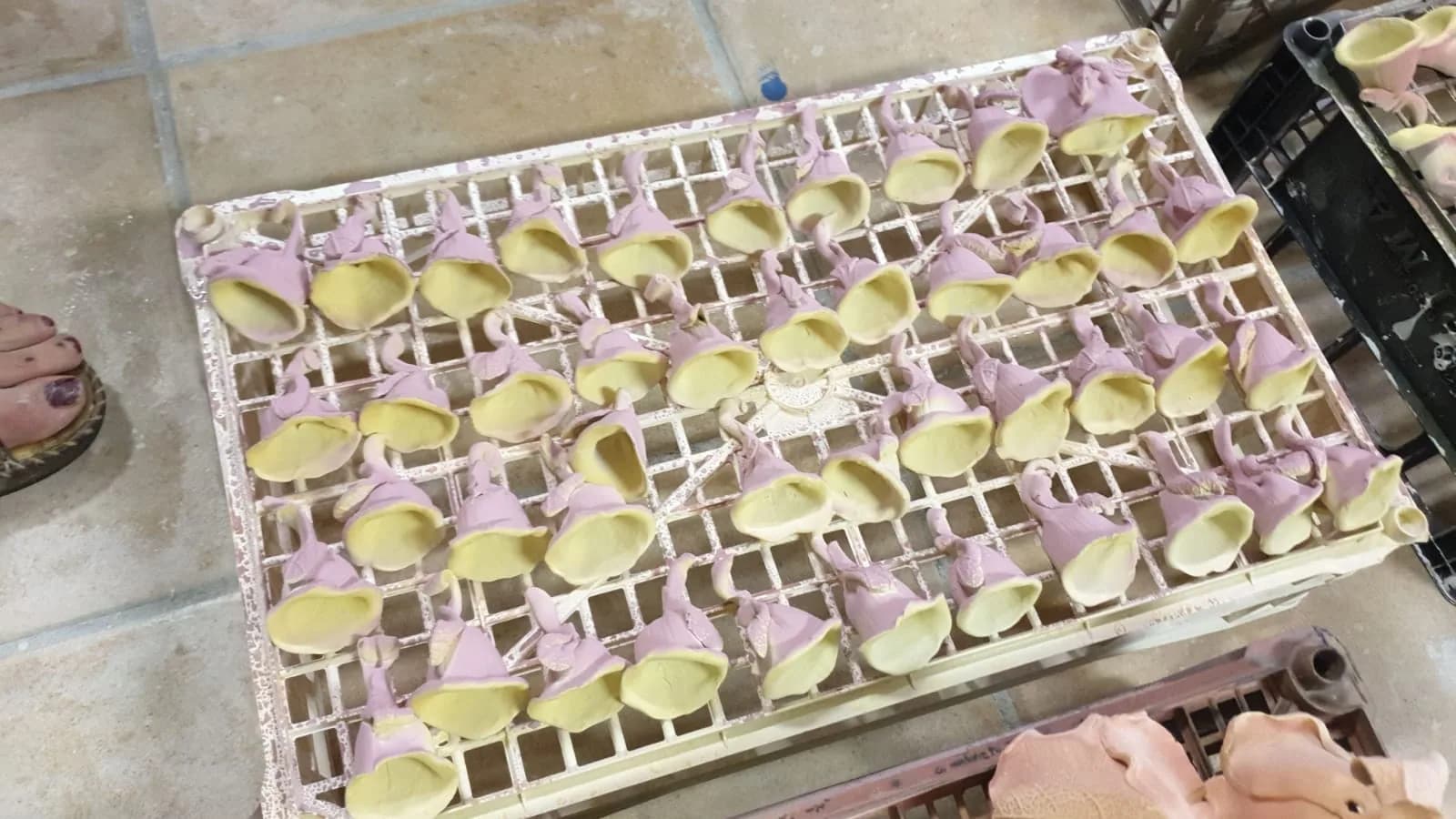
Vasto and LancianoShe brings her ceramic bells to the feast of San Rocco in Vasto and the feast of Sant'Egidio in Lanciano. She is among the very few who still make them strictly by hand.
- January2022
The studio
MontegranaroShe opens the ceramics studio in Montegranaro, in Via Vittorio Veneto. It is a step up in the work: less production, more art.
- 28 May2022
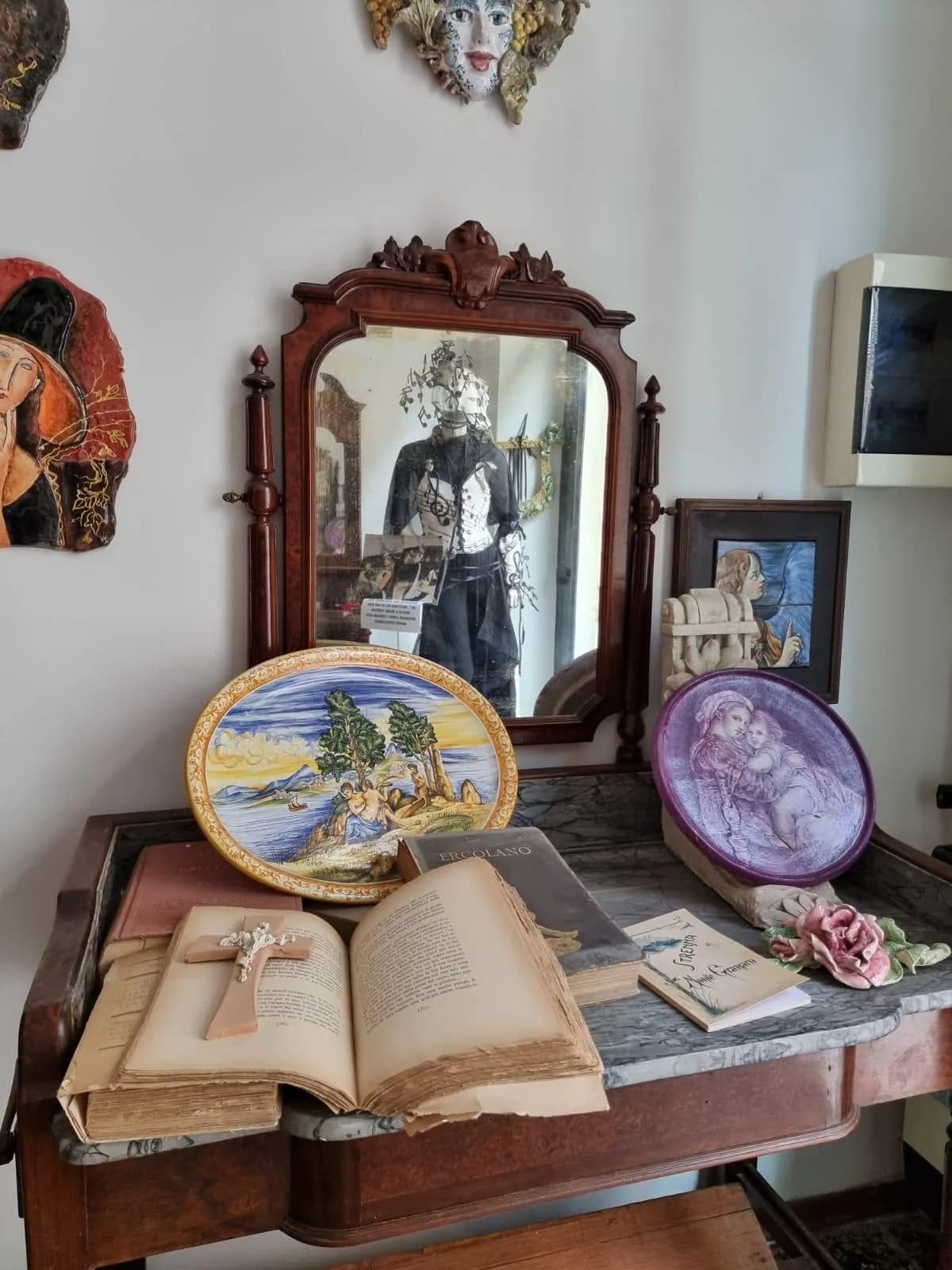
The permanent gallery
MontegranaroShe opens the permanent gallery at Via Vittorio Veneto 4, where her works can be seen together. Three associations help her get there: Assipromos, UDICON Marche and UNA Società di Mutuo Soccorso.
- 2024
The first civic plate
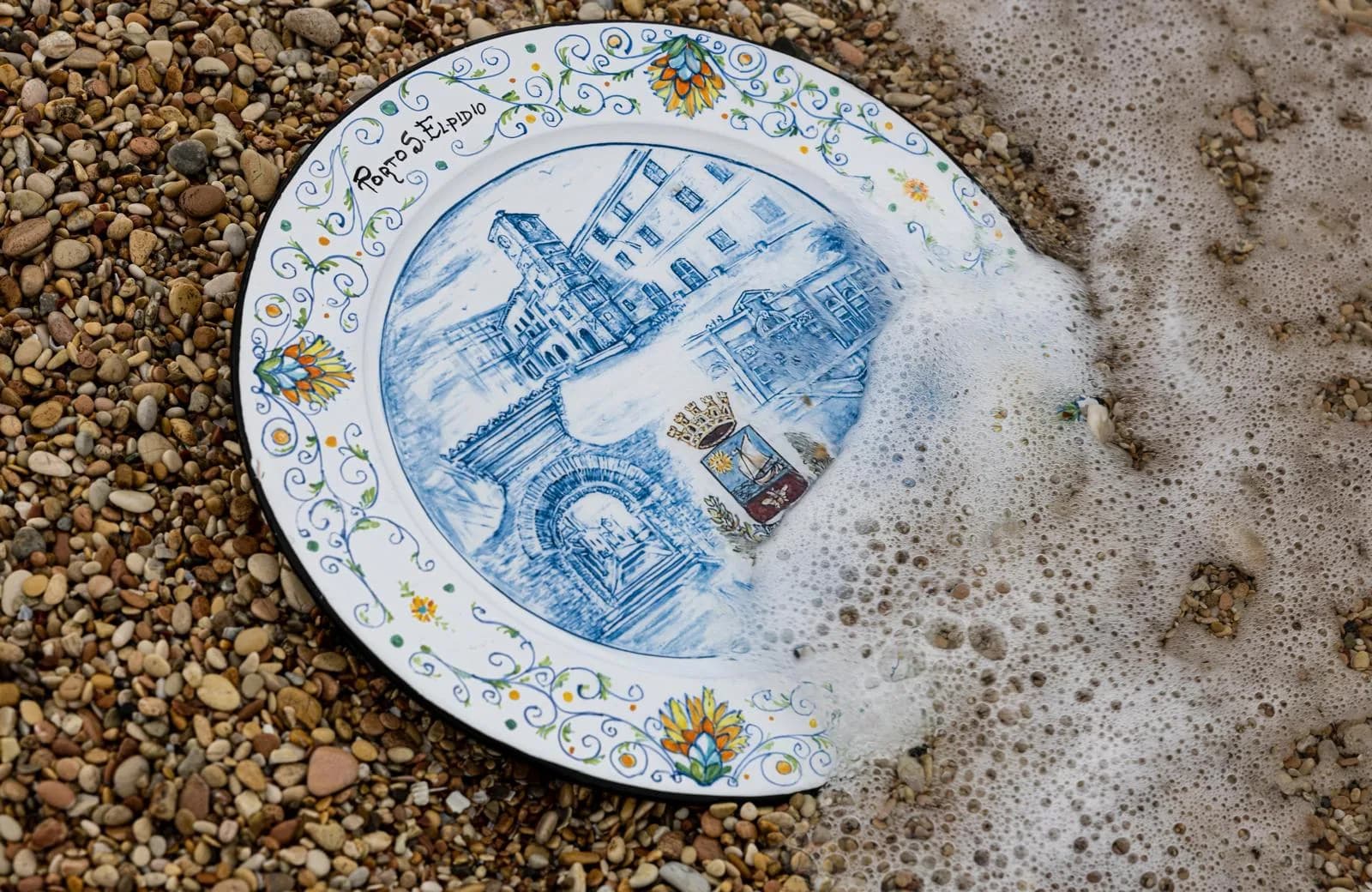
PescaraShe makes a civic maiolica plate for the municipality of Pescara. It is the seed of the project to come: a work that does not decorate a town, it tells it.
- 2024—2026
A plate for your town
MarcheThe travelling exhibition crosses the region: the Mole Vanvitelliana in 2024, Spazio Presente in 2025, the Castello Svevo in 2026, all in Ancona. New plates are added at every stop, and with them new towns.
- 2026
Among the excellences of the Marche
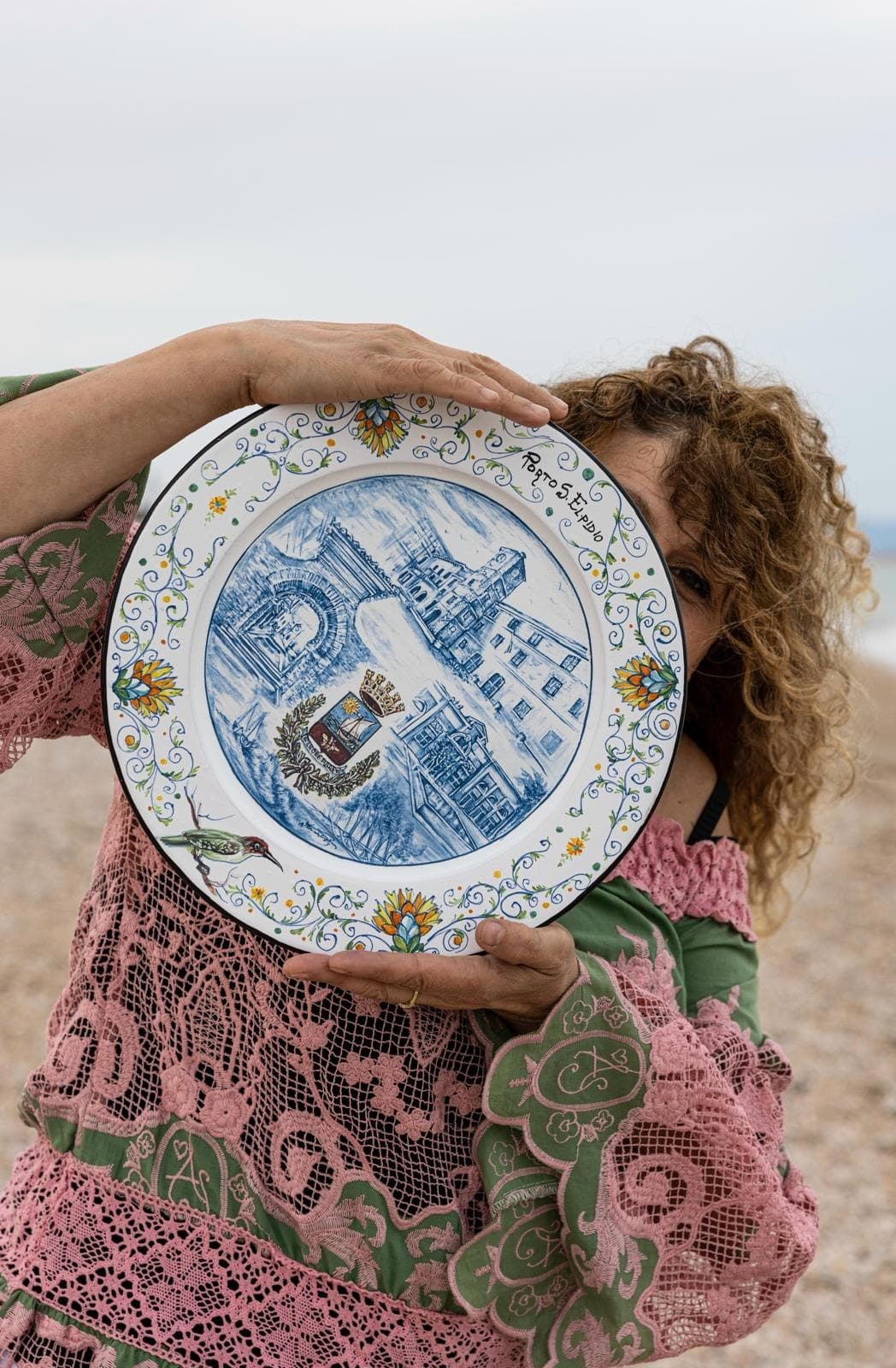
Recognised among the «excellences of the Marche», with a parade of her works under the patronage of the Municipality of Montegranaro, the Marche Region and CNA. In the same year the city of Porto Recanati chooses one of her plates as its civic gift and presents it to Pope Leo XIV.
And now
The studio in Montegranaro is open by appointment, and the travelling exhibition keeps moving between the towns of the Marche. Each new plate adds a town to the story.
The earlier work, from the table services to the painted walls, is gathered in the archive.